Why your marketing campaign needs more than specialists?
Your Meta ads are burning $500 a day. Traffic is coming in. But conversions? Dropping like a stone.
Your developer says the landing page is fine—”It loads fast, everything works.” Your designer insists the visuals are on-brand. Your marketer swears the ad copy is optimized. Everyone’s working hard. Everyone’s defending their territory. And your ROI is bleeding out while they point fingers at each other.
Here’s the brutal truth: You don’t have a developer problem, a design problem, or a marketing problem. You have a systems problem.
And that’s exactly why I approach landing pages—and entire campaigns—differently than anyone else you’ll work with.

The problem with specialists who can't see beyond their screen.
I’m Md Minhazul Abedin. Professionally, I’m a Landing Page Specialist (primarily a Web Developer). Academically, I studied Physics. And philosophically? I practice it with the same dedication most people reserve for religion.
Walking across those disciplines taught me something critical: If you can’t see a problem from different angles, you can’t understand it properly. And you definitely can’t solve it.
Think about how a computer works for a second.
Ask a programmer, and they’ll tell you about software—programs, packages, operating systems, dependencies. Ask an electronics engineer, and they’ll explain circuits, transistors, how tiny electrical charges store data at the hardware level.
Both are correct. Both see completely different pictures. And surprisingly? Both are absolutely essential to build an efficient web server. Throw a networking engineer into the mix, and now you’ve got a team that can actually make things work at scale.
But here’s where it gets interesting—and why this matters to your landing page.
Every discipline has limits (And why that should change how you think about problems)
Our current computer chips are approaching physical boundaries. Engineers are shrinking circuits smaller and smaller, but eventually, you hit walls where classical physics starts breaking down and quantum effects kick in. At that point, the old rules don’t work anymore.
So what do we do? We don’t give up. We switch disciplines. Enter quantum computing—where instead of simple on/off bits, we work with quantum states that can exist in multiple possibilities simultaneously. In 2019, Google’s quantum processor solved a specific problem in 200 seconds that would take traditional supercomputers 10,000 years.
Different problem. Different discipline. Different solution.
This matters in today’s AI-driven world because we’re processing massive amounts of data. Training models like ChatGPT, Gemini, and Claude requires enormous computational power. But here’s where philosophy enters the room: Do we actually need all this computing power? Are these AI tools essential for a better civilization?
That’s not a physics question. That’s not an engineering question. That’s a philosophical one. And neither physicists nor engineers alone can answer it properly.
That’s exactly how I learned to identify, breakdown, and solve problems. And that’s what I bring to my professional career—making me more than just a web developer. I don’t just build landing pages. I design entire campaigns with systems thinking.
What this actually means when you hire me?
Let me be crystal clear about what you’re getting:
If you just need to convert your Figma design to Elementor? Call me. My developer self will handle it perfectly.
If you have an Elementor template but can’t figure out why your page looks broken on mobile after swapping the hero image? Call me. My developer and designer selves work together to fix both the technical issue and the visual problem.
If you have a live landing page and an active campaign, but conversions are getting worse every day? Now we’re talking. My developer, designer, and marketer selves collaborate—and I’ll bring in specialists from other disciplines if your business goals demand it.
Here’s how that actually looks in practice.
How I troubleshoot a Meta Ads Campaign? (Because I only work on Meta)
When you bring me a struggling campaign, I don’t start with Elementor Canvas. I start with philosophy!
Step 1: Strategic analysis (The Philosopher's lens)
First question: Does this campaign actually deserve to run?
Is this the right time for an engagement campaign? Are your target audiences based on real data or educated guesses? What’s the actual business goal here—brand awareness, lead generation, direct sales?
If the foundation is rotten, no amount of pretty design or clean code will save you. We fix this first, or we don’t move forward at all.
Step 2: Creative review (The Designer's lens)
Assuming strategy checks out, now I examine your ad creatives like a graphic designer would.
Is the design aligned with your campaign goal? Does it represent your brand through colors, shapes, and typography? Does it stop the scroll? If I’m not satisfied—or if the campaign genuinely needs it—I won’t hesitate to collaborate with a dedicated graphic designer.
Bad creative wastes every dollar you spend, no matter how good your targeting is.
Step 3: Copy optimization (The Marketer's lens)
Next, I dig into your ad copy as a digital marketer would.
Is this copy convincing enough to move someone from curiosity to action? Are keywords optimized per Meta’s terms and conditions? Is the story structure walking toward conversion, or is it just… talking?
Even perfect design can’t save weak copy. They work together, or they fail together.
Step 4: Landing page experience (The UI/UX Designer's lens)
Now I’m looking at your landing page through a UI/UX designer’s eyes.
Are these layouts and colors aligned with your brand identity? Will the CTA button’s color psychologically trigger visitors to buy or book an appointment? Is the page structure guiding users toward conversion, or confusing them?
If the current page doesn’t satisfy me, I’ll hunt for an Elementor template or Figma layout that fits your campaign goal perfectly. And if your business goal truly demands it? I’ll recommend hiring a UI/UX designer without thinking twice.
Because here’s the thing: I’m not trying to be the hero who does everything. I’m trying to get you results.
Step 5: Development (My home territory)
Finally, I’m in my zone.
I’ll develop your landing page with my soul in it. Pixel-perfect layouts. 100% responsive across every possible breakpoint—desktop, tablet, mobile, and those awkward in-between sizes most developers ignore.
If your landing page has a contact form, I’ll use the right plugin to ensure zero entries get lost. Then I test it after deployment. Every. Single. Element.
And loading speed? If your landing page takes more than 3 seconds to load, everything is at risk. Visitors bounce. Ad costs skyrocket. Conversions at risk! So I optimize speed relentlessly or suggest a paid plugin if we are in a live campaign.
Step 6: Tracking & analytics (The Data Analyst's lens)
After deploying and testing, I set up Meta Pixel properly—and even CAPI (Conversions API) on demand.
Why? Because tracking conversions helps you:
- Accumulate audiences for future campaigns
- Evaluate ROAS (Return on Ad Spend) accurately
- Calculate real ROI (Return on Investment)
- Make informed business decisions instead of guessing
You can hire me for the Full Architecture — or just the pieces you need.
Here’s the beautiful part: You’re not locked into one package.
Need just development? I’ve got you.
Need development + design troubleshooting? Done.
Need the entire campaign architecture reviewed and rebuilt? Let’s do it.
I scale to your needs and your budget. But I always see the whole picture, even when I’m only working on one piece.
The real problem in digital business today (And why most campaigns fail?)
In this era of speed and distraction, we’re facing a massive structural problem in digital businesses:
- Most SEO experts can’t understand the necessity of seasonal paid promotion
- Developers don’t understand the psychological power of graphic design
- Graphic designers don’t understand conversion optimization
- And tragically, most of them don’t understand business requirements
It’s like hiring only civil engineers to do architecture, electrical wiring, interior design, and construction—then wondering why the building doesn’t feel right.
You wouldn’t build a house that way, right? So why build campaigns that way?
When you hire just an ad expert to run your entire campaign, you’re gambling with your budget. Different disciplines see different problems. And when nobody’s connecting the dots? You burn cash without getting ROI.
I'm not a jack of all trades — I'm just a landing page developer who knows how to run a business!
Let me be very clear: I’m not a jack of all trades trying to do everything myself.
I’m a Landing Page Specialist who understands the entire ecosystem. I know when my expertise is sufficient, and I know when to bring in dedicated experts for your campaign’s success.
Think of me as the architect who:
- Sees the complete blueprint
- Identifies what’s working and what’s broken
- Fixes what’s in my capacity immediately
- Calls in specialists when the business goal demands it
Because selling a product or service is teamwork. And somebody needs to be coordinating that team with your business goals in focus—not just defending their own territory.
That’s what made me a Landing Page Specialist instead of just another developer.
The way I approach different industries: Practice projects that show my thinking.
I practice my craft through demonstration projects across various industries. While these aren’t live client campaigns (those remain confidential), they show how I think about different business challenges and apply systems thinking to landing page development.
These projects fall into two categories: Figma-to-Elementor conversions (taking designs and building them pixel-perfect) and Template customizations (transforming generic templates into conversion-focused pages).
Figma to Elementor: design fidelity meets functionality
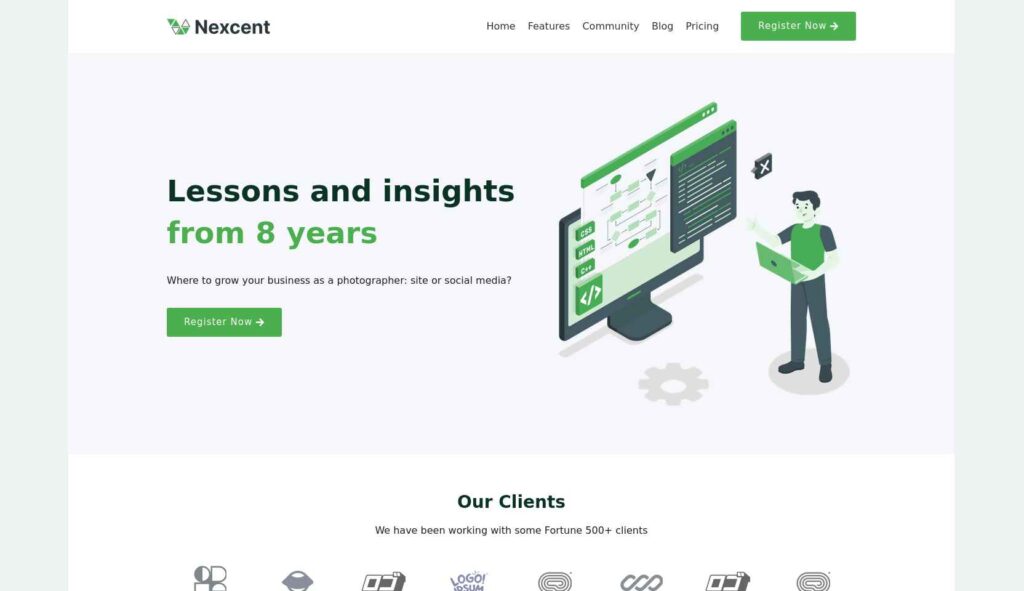
Nexcent - Community Platform
Type: Figma to Elementor | Industry: SaaS/Tech
Challenge: How do you make a complex community platform feel approachable?
My Approach: Clean, illustrated design with social proof integration. Translated the designer’s vision into a fully responsive Elementor build while maintaining the friendly, accessible aesthetic that makes tech feel human.
Focus: Design fidelity + clarity in messaging
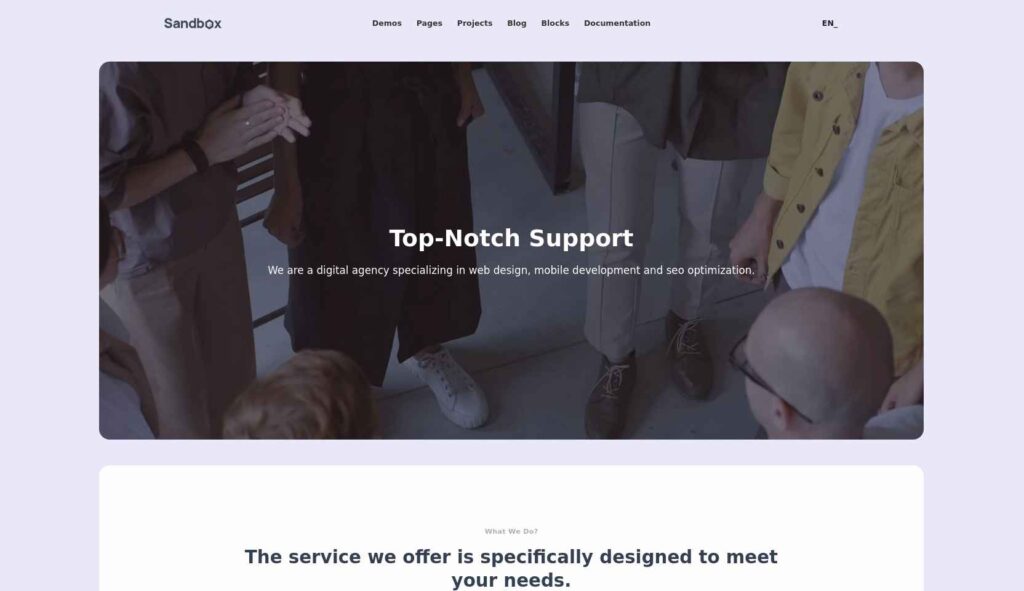
Sandbox - Digital Agency
Type: Figma to Elementor | Industry: Web Design/Development
Challenge: Showcasing agency capabilities through clean portfolio presentation
My Approach: Converted the minimalist Figma design into a professional Elementor site with team collaboration imagery. Every element reinforces credibility and technical expertise.
Focus: Professional presentation + portfolio architecture
Template editing: transforming generic into strategic
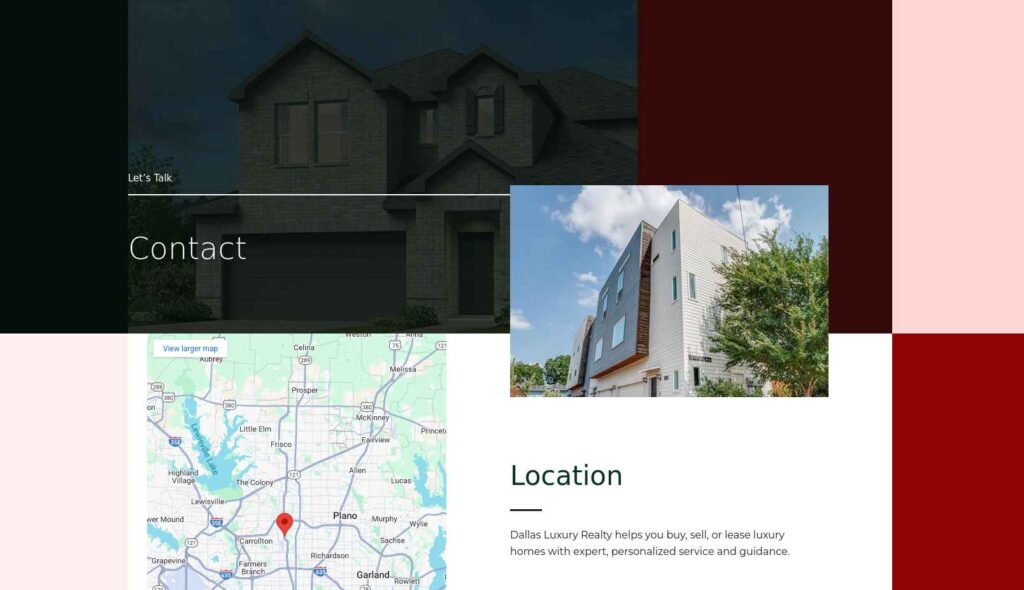
Dallas Luxury Realty
Type: Template Customization | Industry: Real Estate
Challenge: Generic real estate template not matching luxury market expectations
My Approach: Elevated it with sophisticated color palette, integrated Google Maps for location intelligence, premium property showcasing. The design language had to match the property value—no room for generic stock templates.
Focus: Premium experience + location-based trust
Fitness Studio
Type: Template Customization | Industry: Health/Wellness
Challenge: Static template that doesn’t capture workout energy
My Approach: Transformed it with high-energy visuals, bold CTAs (“JOIN NOW” in vibrant red), clear class descriptions. The design intensity matches the workout intensity—because if your landing page feels lazy, why would someone expect your classes to be challenging?
Focus: Energy alignment + clear action path

What these demonstrate?
Technical Skills:
Pixel-perfect Figma conversions, responsive design across all breakpoints, template transformation that goes beyond cosmetic changes.
Design Thinking:
Every industry needs different psychological triggers. Locksmith needs trust. Hotel needs inspiration. Fitness needs energy. SaaS needs clarity. I don’t just build pages—I build experiences aligned with industry psychology.
Systems Approach:
None of these exist in isolation. Each one considers: Who’s the audience? What’s their emotional state? What objections do they have? What action do we want them to take? Then design, copy, and functionality all serve that goal.
These are practice projects where I explore how different industries need different approaches. When you hire me for real campaigns, this same systematic thinking gets applied to your actual business goals—with real data, real tracking, and real optimization based on what actually converts your specific audience.
What this means for your business?
You get the efficiency of a single point of contact with the quality of a coordinated team—without the communication breakdowns that kill campaigns.
You get someone who:
- Thinks in systems, not silos
- Prioritizes your ROI over showing off technical skills
- Knows when “good enough” is perfect, and when excellence is non-negotiable
- Speaks both business language and technical language fluently
Most importantly? You get someone who actually cares whether your campaign works—not just whether the design is mind-blowing.